
Chicken Train
One track. One chicken. One cash-out that decides how the story ends.
The Quick Game Everyone’s Talking About
Chicken Train isn’t a slot. It doesn’t spin, it doesn’t wait, and it definitely doesn’t pretend to be “relaxing”. It’s a tense little rail-run where each tap feels like choosing between banking profit and tempting fate for a bigger multiplier.
UK players stick with Chicken Train for one reason: it’s decision-first. The moment is yours, the pressure is real, and the next move is always optional – right up until it isn’t. It’s simple, sharp, and weirdly hard to walk away from.
Chicken Train turns a tiny wager into a serious choice – every single step.
What You Actually Do in Chicken Train
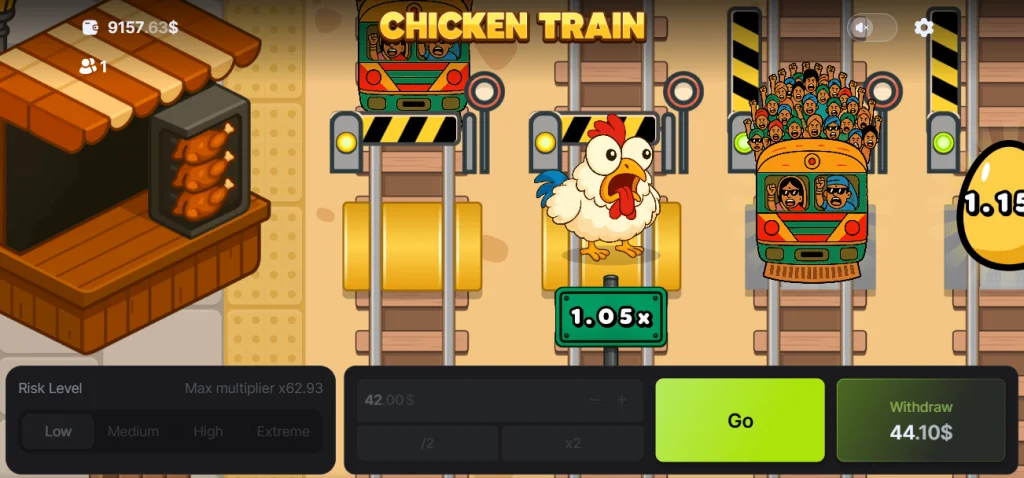
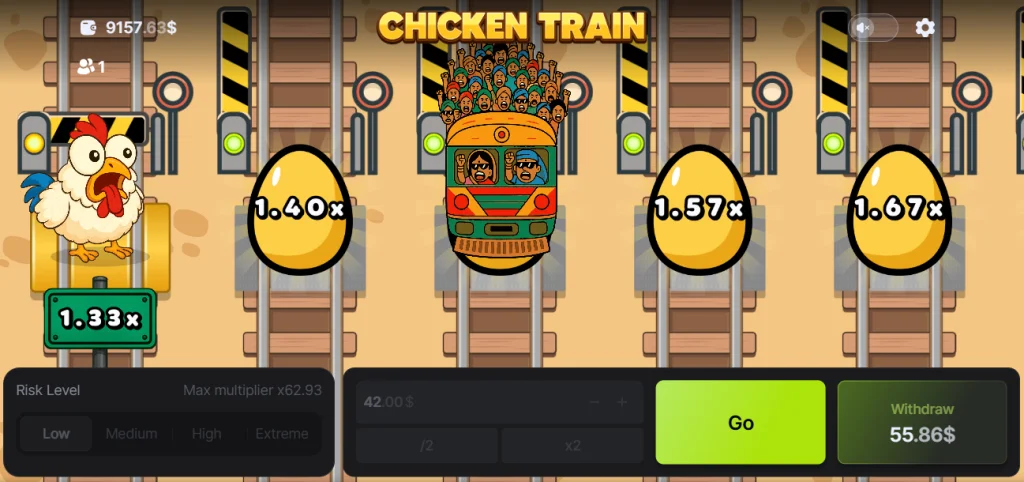
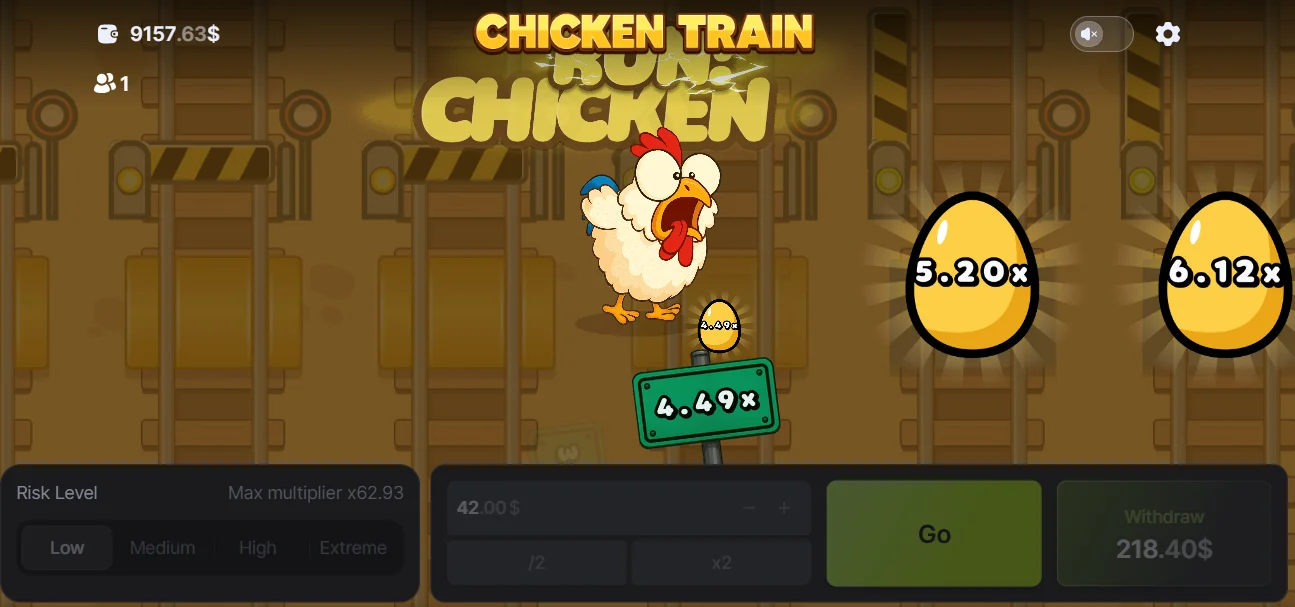
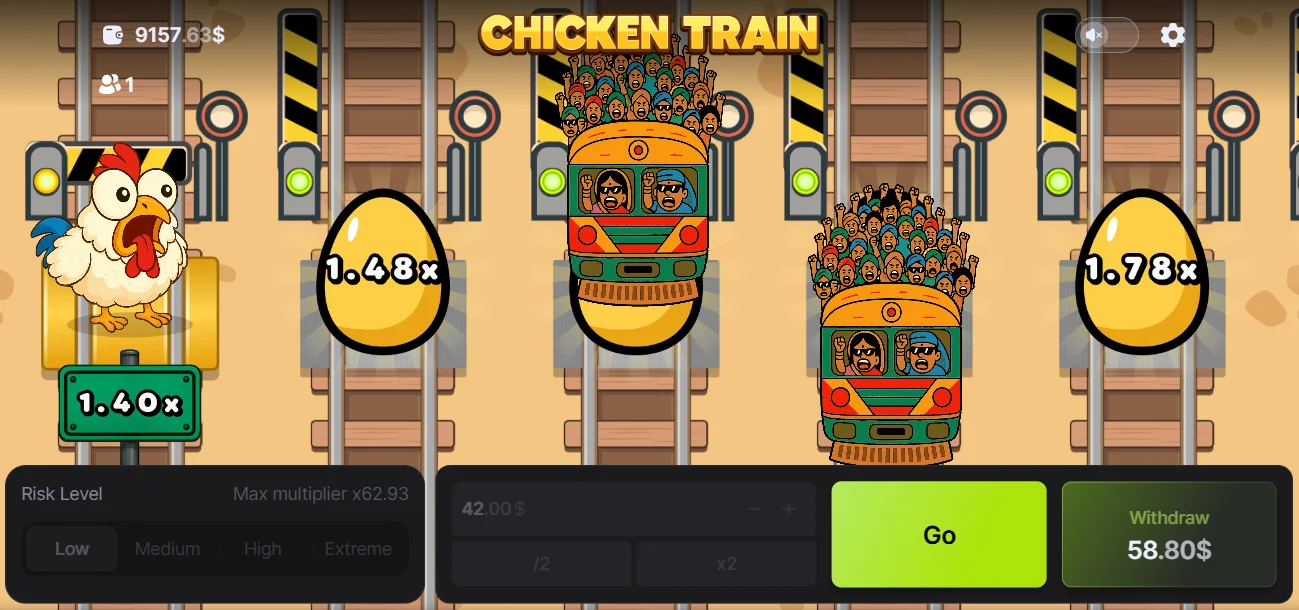
You send a chicken down a set of tracks, step by step, while trains threaten the route. Every safe move bumps your multiplier higher. Every extra move raises the risk. You choose when to stop and cash out and if the chicken gets hit, the round ends instantly.
- Every step = a higher multiplier
- Every step = a higher chance to lose
- Cash out whenever you want
- One hit and the stake is gone
Why It Feels So Different
Slots distract you. Typical crash games rush you. Chicken Train does something nastier: it pauses and asks you to decide again. That tiny stop after each safe step is where the real game lives, because you get just enough time to convince yourself you’re “due” one more.
Chicken Train – Technical Overview
Before the nerves and the near-misses, it helps to understand what Chicken Train is built to do. It’s a modern crash-style arcade title that runs smoothly in-browser, designed for quick sessions, instant decisions, and clean mobile play. The round outcome is generated by a verifiable system, with each step treated as its own risk.
Core Game Data
- Game Type: Crash / Arcade Gambling
- Risk Levels: Low, Medium, High, Extreme
- Max Multiplier: depends on risk settings
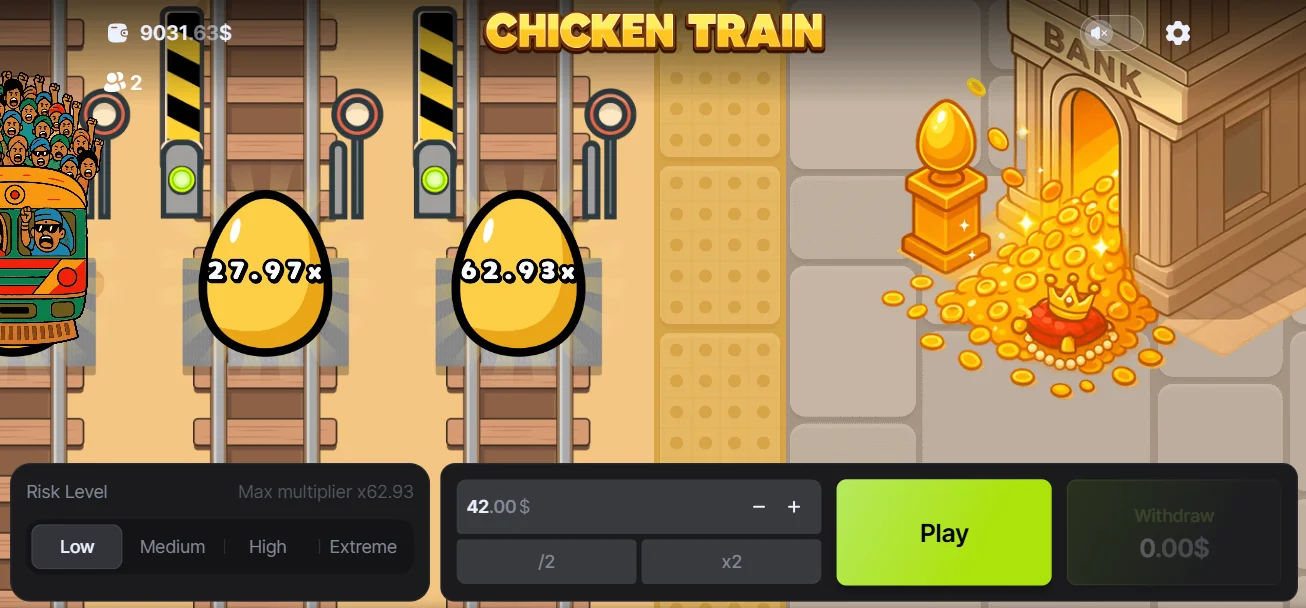
- Low Risk Cap: up to x62.93
- Min Bet: £0.10
- Max Bet: £150
- Max Payout: £10,000
- Platforms: Desktop & Mobile
How the Engine Works
Chicken Train uses a provably fair structure that lets you verify rounds after the fact. The game records cryptographic data (hash and salt) and provides a simple check method so outcomes can be audited rather than “trusted”.
Most importantly: each step is evaluated independently. There are no patterns to learn, no streaks to rely on, and no “momentum” you can ride. It’s clean maths dressed up as cartoon chaos.
Difficulty System at a Glance
| Mode | Steps | Risk Profile | Typical Play Style |
|---|---|---|---|
| Low | Long | Lower | Settling in & steadier cashouts |
| Medium | Medium | Balanced | Everyday sessions & controlled pushes |
| High | Short | High | Sharper swings & bigger targets |
| Extreme | Shortest | Very High | All-in adrenaline and fast endings |
The range of risk settings is what makes Chicken Train easy to pick up and hard to master. You can play it like a cautious grinder or treat it like a one-round challenge – the game stays simple, but the decisions get heavier the longer the chicken survives.
Low Risk
Low risk is the most forgiving setting, built for learning timing and keeping sessions calm. Multipliers build more gradually and the chicken tends to survive longer, which makes it ideal for players who prefer steady cashouts over dramatic all-or-nothing swings.
Medium Risk
Medium is where Chicken Train starts to bite. It feels quick without being brutal, giving you enough breathing room to plan while still delivering proper spikes in multiplier growth. For many UK players, this becomes the default pace for regular play.
High Risk
High risk turns the track into a sprint. Successful steps feel louder, wins come with bigger jumps, and the margin for error shrinks fast. It’s best treated as a targeted mode: set a multiplier goal, hit it, and bank before the trains collect the rest.
Extreme Risk
Extreme is designed for spectacle. Rounds end quickly, multipliers can surge, and discipline matters more than ever. If you’re playing this mode, the smartest move is usually the one that feels slightly “too early” to cash out.
How Chicken Train Plays – From First Tap to Final Cashout
Chicken Train doesn’t open with reels, paylines, or a “feature intro”. It opens with one choice: stake set, risk selected, and a single button that starts the run. After that, the rhythm is simple – step, breathe, decide, repeat, until you bank the win or the trains end the round.
The Structure of a Single Round
- You choose your stake and risk level
- Press Play to move the chicken one step
- Each safe step increases the multiplier
- After every step: Continue or Cash Out
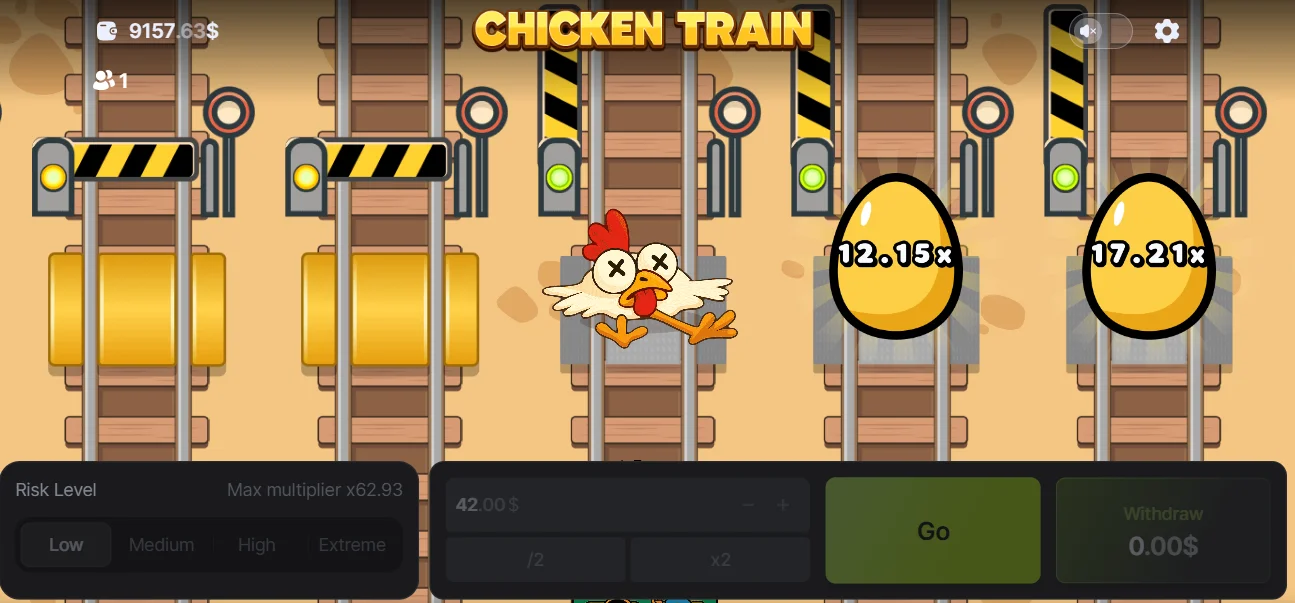
- If a train hits – the round ends instantly
There’s no countdown forcing you to act. The game waits after each successful step, which is exactly why it feels so intense. That pause invites overconfidence, and overconfidence is how “a sensible win” turns into a hard lesson in one click.
In Chicken Train, the hardest skill isn’t winning – it’s stopping.
RTP, Volatility & The Maths Behind the Tracks
Chicken Train looks playful, but it runs on a sharp risk engine. The important part for players isn’t memorising numbers – it’s understanding what the game rewards: smart cashouts, controlled stakes, and respect for high volatility when you push deeper into the run.
Core Statistical Profile
- Game Pace: Fast, round-based
- Volatility: High
- Multiplier Growth: Step-by-step escalation
- Risk Control: 4 selectable modes
- Average Round Length: Short
RTP is typically provided by the casino/operator in the game information panel, but the feel is universal: results swing. Some sessions look effortless, others end in rapid losses. That’s the trade-off for a game that can escalate your payout quickly when the run goes your way.
High volatility means your bankroll management matters more than your “gut”. If you chase multipliers emotionally, the trains usually win. If you treat rounds like small, repeatable decisions, you give yourself a better chance to leave ahead.
How Multipliers Actually Grow
Each successful step increases the multiplier. Early progress feels modest; later progress can ramp up sharply, especially at higher risk settings. That curve is the whole temptation: the deeper you go, the more “one more step” feels like it could be the turning point.
Important: Every step is calculated independently. Previous wins don’t make the next move safer, and previous losses don’t make a hit “unlikely”. Chicken Train is maths, not momentum.
Once you’re sitting on a strong multiplier, your perception shifts. A £2 stake at x6 stops feeling like profit and starts feeling like something you already own. That’s where good players cash out and everyone else learns why the tracks never negotiate.
Features, Bonuses & Extras That Keep Rounds Moving
Chicken Train keeps it lean. There are no paylines, no side quests, and no distracting mini-games. Everything supports the core loop: choose risk, build multiplier, decide when to cash out. The “extras” are there to make the experience smoother and the decisions clearer – not to bury you in menus.
Core Gameplay Features
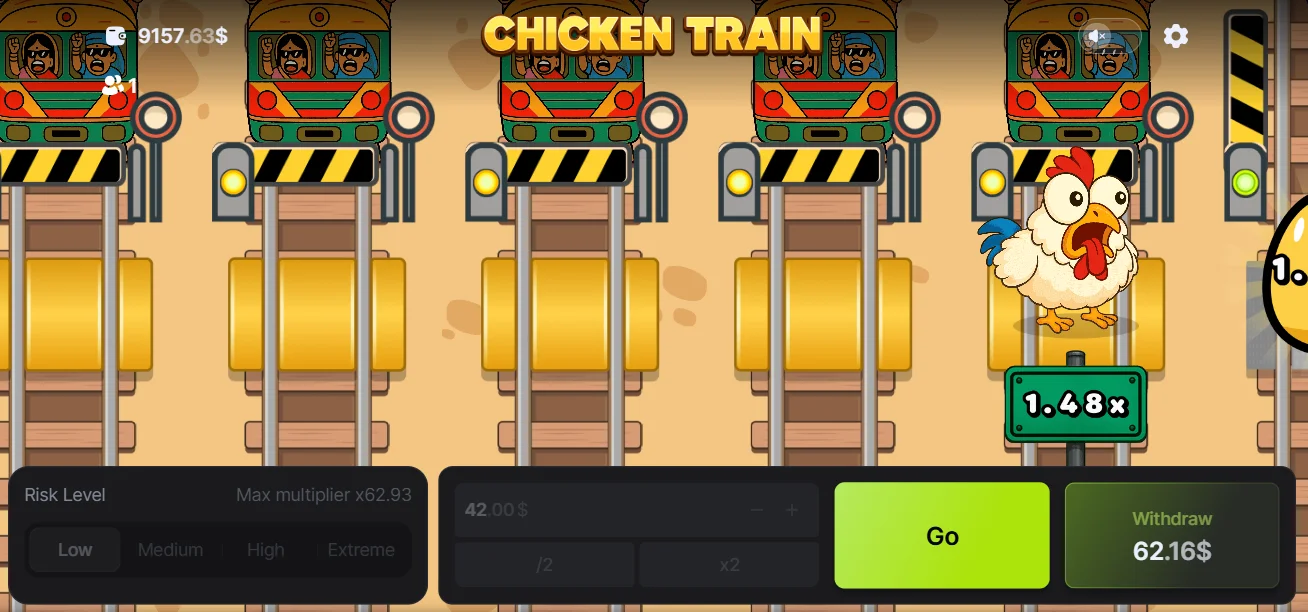
- Instant cashout at any step
- Four risk levels to control pacing
- Provably fair verification tools
- Quick stake adjustments
- Fast round reset for repeat play
- History, live bets & statistics panels
Bonus Run & Momentum Moments
One of the standout mechanics is Bonus Run. When it triggers (from step two onwards), the chicken can dash through multiple steps with a single action, collecting the multipliers along the way. It’s quick, thrilling, and heavily influenced by your chosen risk level.
Bonus Run doesn’t guarantee safety – it simply accelerates the action. In other words: it makes the best moments faster, and the worst moments immediate.
Bonuses & Casino Promotions
Chicken Train itself is feature-light by design, but it can still benefit from casino promotions where permitted. Depending on the operator, reload offers or cashback can help smooth out volatility and extend a session without changing the core gameplay.
The sensible approach is the same either way: set a cashout target, stick to it, and treat higher risk modes as short, controlled attempts rather than endless chasing.
Smart Strategies & Bankroll Habits for Chicken Train
You don’t “solve” Chicken Train – you manage it. The players who leave with profit aren’t the bravest; they’re the most consistent. They keep stakes sensible, take repeatable wins, and avoid turning a clean session into a dramatic comeback story on the tracks.
The Conservative UK System
- Focus on Low & Medium risk
- Cash out around x1.8 – x2.6
- Stake 1–2% of bankroll per round
- Only raise stakes after profit sessions
The Aggressive Profit System
- Rotate Medium & High risk
- Cash out between x3 – x7
- One Extreme attempt per session
- Bank wins early, avoid chasing losses
The biggest threat in Chicken Train isn’t the trains – it’s the feeling that you “owe yourself” a bigger multiplier. Treat each round like a small decision, not a destiny, and you’ll last longer than most players ever do.
Chicken Train rewards control and punishes ego – quickly.
Mobile Experience & UX – Built for Quick UK Sessions
Chicken Train fits modern British play habits perfectly: short sessions, mobile-first access, and instant engagement. Whether you’re on a commute, on a break, or squeezing in a few rounds at home, the interface stays clean and the decisions stay front and centre.
- Plays smoothly on iOS & Android browsers
- No installs or extra downloads
- Simple controls for Play and Cashout
- Loads fast on Wi-Fi or mobile data
- Clear layout with minimal clutter
On mobile, the game can feel even more intense: rounds are faster, taps are easier, and “just one more step” becomes a habit. That frictionless design is great UX and exactly why setting a limit before you start is such a smart move.
If you’re used to quick UK betting apps and instant casino play, Chicken Train will feel natural immediately, which is both the appeal and the danger.
The Psychology of Chicken Train – Why It’s So Hard to Cash Out
Chicken Train is a game of emotion disguised as a simple mechanic. It’s built around anticipation: a rising multiplier, a pause, and a choice. That brief moment after a safe step is where impulse fights discipline and where most players give the game back what they’ve already won.
Each safe move adds confidence. Each bigger number changes what your stake “means”. By the time you’re deep into a run, your brain stops thinking in pounds and starts thinking in outcomes: “I can’t stop now.” That’s the trap and it’s why calm play beats brave play.
Three Psychological Traps
- Ownership feeling – “This win is mine already”
- Escalation – “I’ve come too far”
- Chasing – “One more fixes it”
Why Players Tap Too Long
- Decision pauses increase temptation
- Multipliers create false certainty
- Humour lowers perceived risk
- Losses trigger emotional chasing
The longer the chicken survives, the harder it is to walk away cleanly.
The best Chicken Train sessions are boring in the right way: consistent stakes, repeatable targets, and cashouts that happen before the excitement convinces you to rewrite your plan.
Pros & Cons of Chicken Train – The Honest Balance
What Players Love
- Decision-driven gameplay that stays tense
- Quick rounds with instant cashout control
- Four risk modes for different play styles
- Bonus Run adds punchy momentum moments
- Strong mobile experience
- Provably fair verification for transparency
- Perfect fit for short UK sessions
What Could Be Better
- High volatility can burn a bankroll fast
- Extreme mode is brutally unforgiving
- Not ideal for risk-averse players
- Easy to overplay without limits
- Short rounds can encourage chasing behaviour
Frequently Asked Questions
Is Chicken Train legal for UK players?
Chicken Train is available at online casinos that accept players in Great Britain. Always choose an operator that’s properly licensed and provides clear terms, fair play information, and responsible gambling tools.
Can I cash out at any time?
Yes. After each safe step you can choose to continue or cash out immediately. That cashout control is the core mechanic and the main skill is knowing when to take the win.
What risk level is best for beginners?
Low risk is the best place to start. It gives longer runs and steadier multiplier growth, helping you learn timing and cashout discipline before pushing into higher-risk modes.
How much can I win?
The game limits shown in the interface include stakes up to £150 and a maximum payout of £10,000 per round. The multiplier you reach depends on risk level and how long the chicken survives.
Is the game fair?
Chicken Train includes provably fair verification. Results are recorded with cryptographic data so players can check round outcomes, rather than relying on blind trust.
Should You Play Chicken Train?
Chicken Train is a clean, modern crash-style game that does one thing exceptionally well: it makes every click matter. If you enjoy quick rounds, visible risk control, and the constant tension of deciding when to bank, it’s a strong pick for your catalogue. Just treat it with respect – the tracks are friendly until they aren’t.

Oliver Grant
Oliver Grant is a UK-based iGaming writer and game tester with a strong focus on crash, arcade and high-volatility casino games. With several years of hands-on experience reviewing online casino titles, he specialises in testing gameplay mechanics, risk structures and player decision systems. Oliver approaches each game from a player’s perspective, paying close attention to pacing, balance and usability across devices. His work emphasises clarity, fairness and responsible play, helping UK players understand how games behave before committing real money. His reviews are written to be practical, unbiased and easy to follow.