
Rooster Run
One bet. One brave rooster. One jump too far.
The Game Britain Can’t Stop Daring Itself To Play
Rooster Run isn’t a slot. It isn’t a table game. It’s a jump-by-jump nerve test where every platform looks safe until it suddenly isn’t. You’re not waiting for reels – you’re choosing your own risk in real time.
UK players get hooked because it feels personal. You watch the multiplier climb, you feel the temptation build, and you decide whether to bank the win or push your luck. The rooster keeps moving. Your discipline doesn’t always follow.
Rooster Run is the moment you know you should cash out… and still click forward.
What You Actually Do in Rooster Run
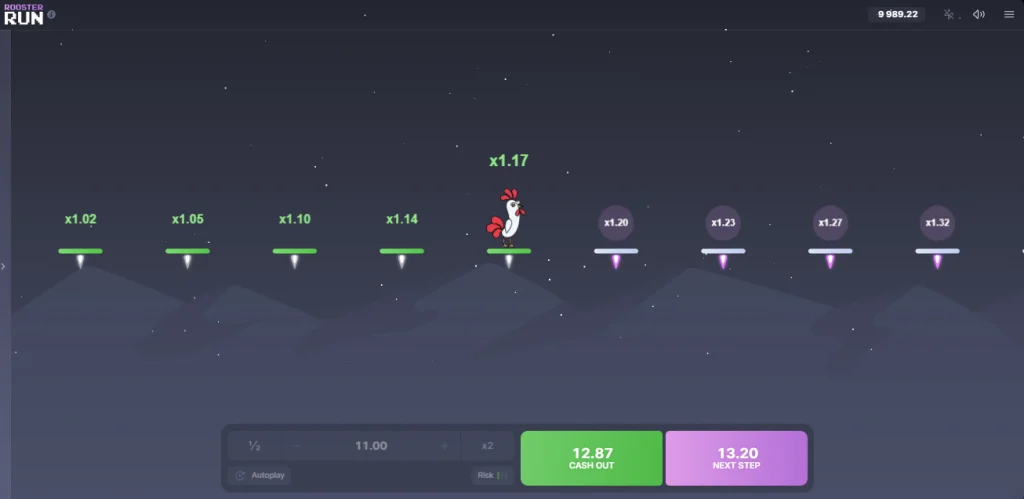
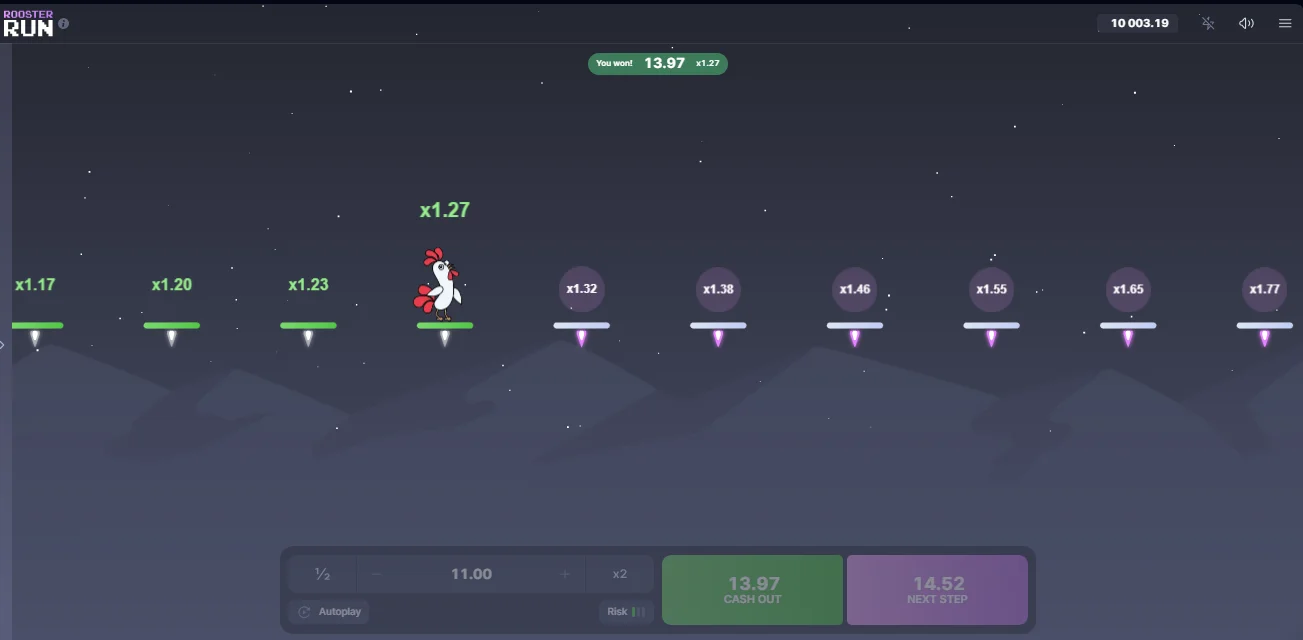
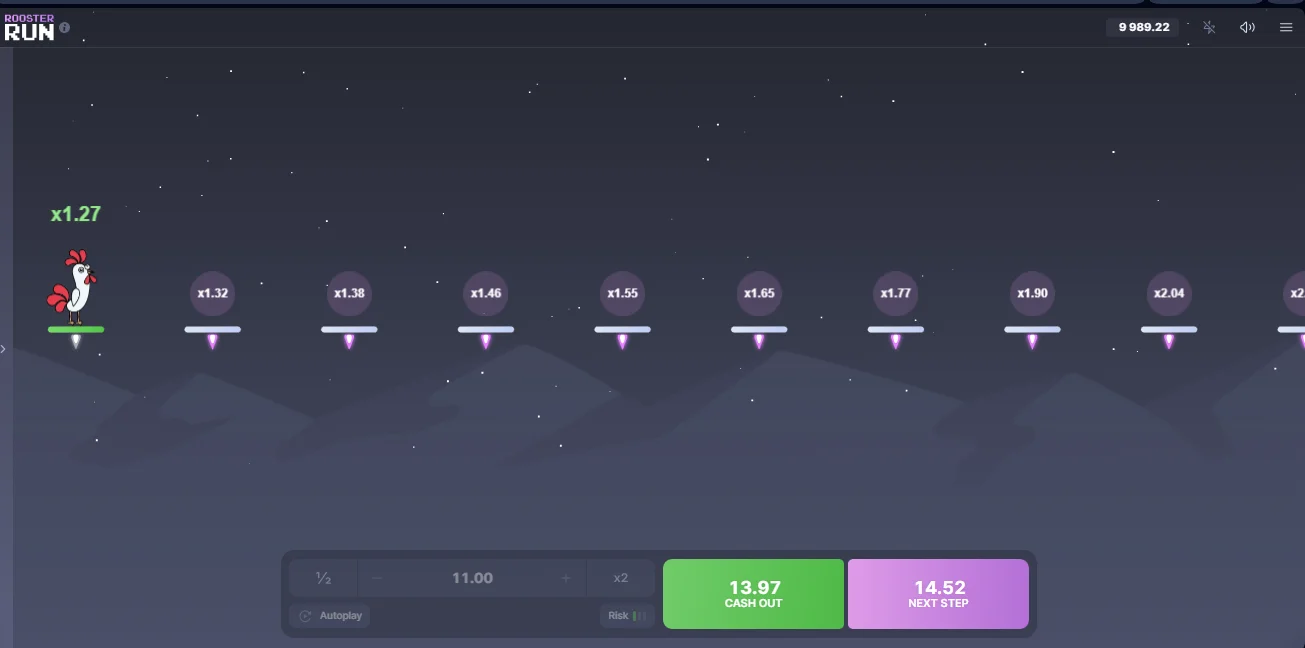
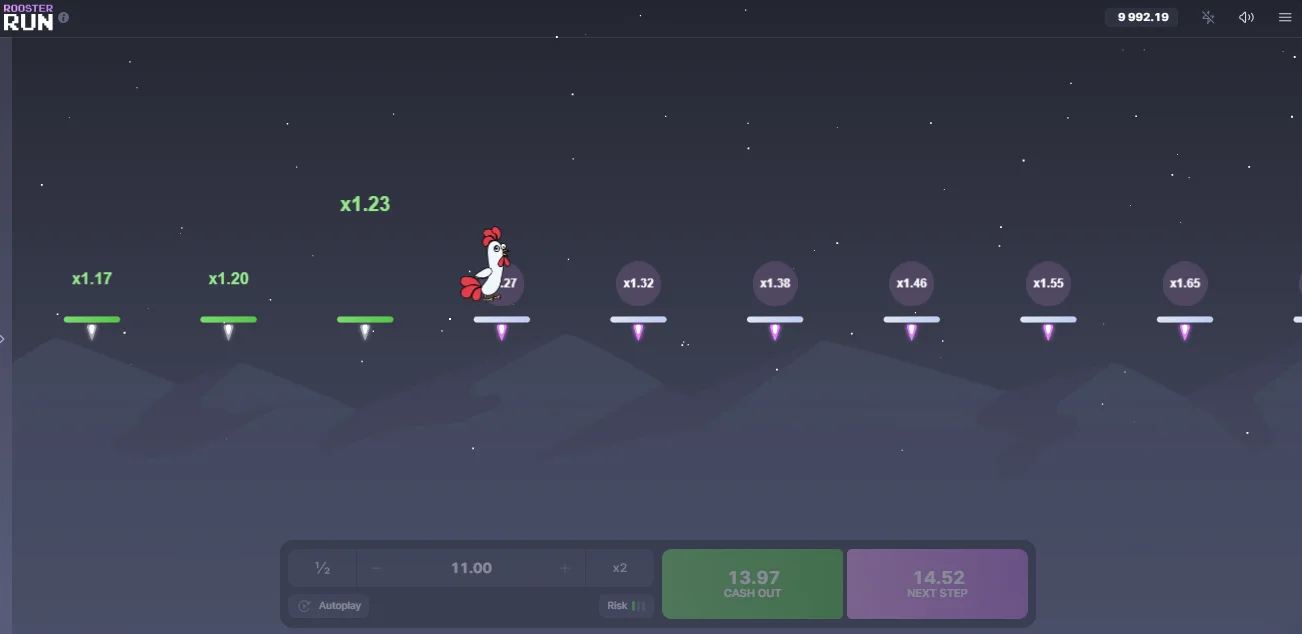
You place a stake, pick your risk level, and send a rooster hopping across floating platforms. Each clean jump increases the multiplier. Each extra jump increases the chance you wipe out and lose the bet. You control the courage. The game controls the fall.
- Every jump = higher multiplier
- Every jump = higher chance to slip
- Cash out whenever you want
- Miss once and the stake is gone
Why It Feels So Different
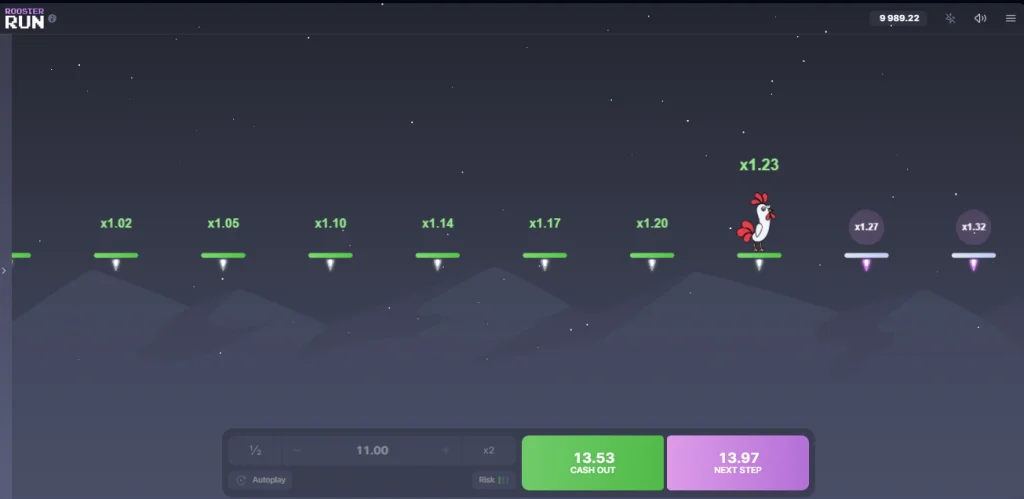
Most casino games hide the risk behind animations. Rooster Run puts it on your fingertip. The round pauses, the multiplier stares at you, and you get a clean choice: lock the profit or chase the next platform. That little pause is where the addiction lives.
Rooster Run – Technical Overview
Before you start chasing multipliers, it helps to know what Rooster Run is built to do. It’s a browser-based arcade crash title designed for quick sessions, clean controls, and instant round resets. No downloads, no waiting – just bet, jump, decide.
Core Game Data
- Provider: Mascot Gaming
- Release: May 29, 2025
- Game Type: Crash / Step-Based Arcade
- RTP: 95%
- Volatility: Adjustable (Risk Levels)
- Max Multiplier: x10,000
- Max Win: £250,000
- Min Bet: £0.01
- Max Bet: £25
- Platforms: Desktop & Mobile
How the Engine Works
Rooster Run is decision-led, but outcomes are still randomised per action. Each jump is calculated independently, so “momentum” is just a feeling – not a mechanic. Your best tool is timing: knowing when a sensible cash out beats a heroic story.
That single-step structure is what makes the game so sharp: every click is a fresh risk, and every saved win is earned by restraint, not luck alone.
Difficulty System at a Glance
| Mode | Lanes | Risk Profile | Typical Play Style |
|---|---|---|---|
| Low Risk | 30 | Low | Steady cashouts & learning |
| Medium Risk | 25 | Balanced | Most sessions, best tempo |
| High Risk | 21 | High | Big swings, big targets |
| Autoplay | Varies | Chosen | Hands-off, rule-based runs |
Because the risk level reshapes the multiplier ladder, Rooster Run can feel like three different games: a controlled grinder, a balanced thriller, or a high-voltage sprint where a small stake can explode or vanish – fast.
Easy Mode
Easy mode maps to Low Risk: the longest platform run and the gentlest multiplier growth. It’s where new UK players learn the rhythm, practise cashing out without panic, and keep swings manageable during longer sessions.
Medium Mode
Medium mode uses the balanced ladder. Multipliers climb quickly enough to stay exciting, but you still get moments to breathe between jumps. For most players, this becomes the “default” because it feels fair – until it isn’t.
Hard Mode
Hard mode aligns with High Risk: fewer platforms, steeper multiplier spikes, and harsher outcomes. This is where confident players chase the headline numbers, knowing the rooster can slip early and end the round instantly.
Hardcore Mode
Hardcore mode is the mindset, not a comfort setting: aggressive targets, fast decisions, and minimal forgiveness. It’s best paired with strict stop rules or autoplay limits, because the temptation to “just one more jump” is strongest here.
How Rooster Run Plays – From First Bet to Final Cashout
Rooster Run starts the same way every good gamble does: with a stake and a choice. You set your bet, pick a risk level, and hit BET. From that point, the round is yours to manage – until the moment it isn’t.
The Structure of a Single Round
- Choose your stake and risk level
- Press BET to start the round
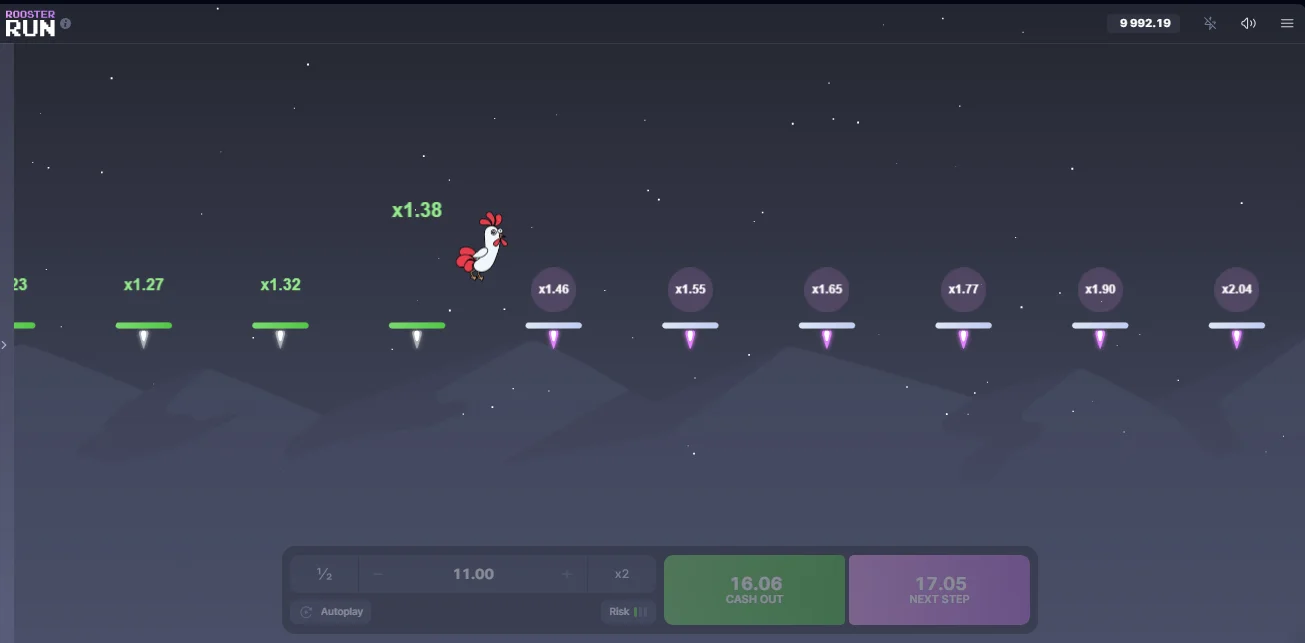
- Use FORWARD to jump to the next platform
- Cash out at any time with CASH OUT
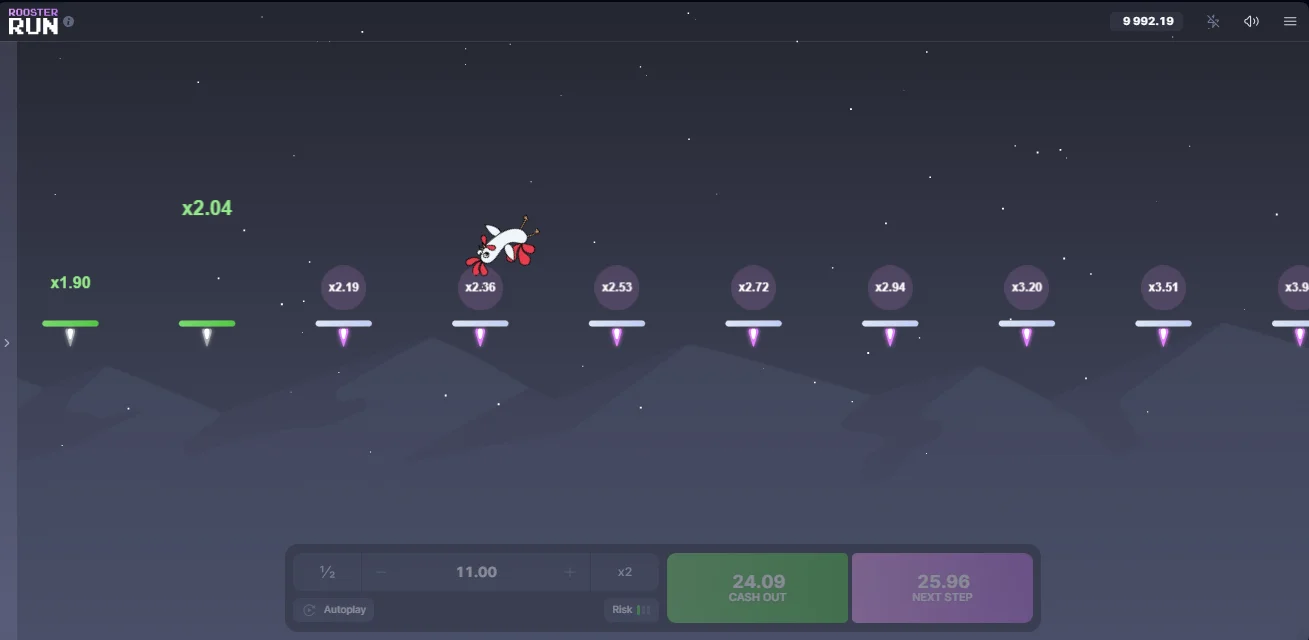
- If the rooster slips, the bet is lost
There’s no countdown rushing you. After each safe jump, the game waits. That pause feels friendly and it’s exactly what makes Rooster Run dangerous, because it gives your brain time to negotiate with itself.
Rooster Run is a simple loop: profit, temptation, decision, repeat.
RTP, Volatility & The Mathematics of the Jumps
Rooster Run looks playful, but it behaves like a proper high-stakes crash game. The swings are real, and the risk level you choose changes how brutal those swings feel. If you treat it like a slot, the game will educate you quickly.
Core Statistical Profile
- RTP: 95%
- Volatility: Adjustable
- Max Multiplier: x10,000
- Max Win: £250,000
- Average Round Length: Fast
Instead of one long animation, Rooster Run breaks risk into clickable steps. That means variance feels sharper: a handful of unlucky jumps can wipe a session, while one disciplined cash out can flip it back in your favour.
Think of it as a game of timing, not prediction. The safest profit is the one you actually bank – not the multiplier you nearly reached.
How Multipliers Actually Grow
Multipliers are placed along the platform path and depend on the risk setting. Low Risk offers more steps and smoother growth. Medium and High compress the run, making the ladder steeper and the outcomes louder – especially when you chase deeper platforms.
Important: Each jump is calculated independently. Winning streaks don’t “warm up” the game, and losing streaks don’t mean you’re “due”. Your next click is always a new risk.
The real challenge is psychological: once your stake is multiplied, it stops feeling like profit and starts feeling like something you already own. That’s when players hold too long and the rooster reminds them who’s in charge.
Features, Bonuses & The Extras That Make Rooster Run So Moreish
Rooster Run keeps the feature set focused: it gives you tools that change how you play, not distractions that hide the risk. The result is a clean, modern crash experience where every setting exists to sharpen control or increase pace.
Core Gameplay Features
- CASH OUT anytime during a run
- Low / Medium / High risk levels
- Autoplay with target multiplier options
- Optional auto cashout rules
- Fast rounds with instant reset
- Player stats, history & rankings
Demo Mode & Free Play
If you’re learning the timing, the demo is the smartest place to start. It lets UK players practise the bet–jump–cash out loop, test risk levels, and explore autoplay settings without risking a single penny.
Use it to find a cashout comfort zone, then move to real money only when your decisions feel calm – not impulsive.
Bonuses & Casino Promotions
Rooster Run doesn’t need in-game bonus rounds because the “bonus” is the multiplier ladder itself. That said, it can pair well with casino promos that increase session length, like cashback or selected welcome offers, depending on the site’s rules for crash games.
The sensible approach is simple: treat promos as padding, not permission to chase. Bigger balance should mean stricter cashouts, not bolder clicks.
Smart Strategies & Bankroll Habits for Rooster Run
Rooster Run isn’t “solved” by bravery. It’s managed by routine. The players who last aren’t the ones who click furthest – they’re the ones who cash out consistently and keep stakes boring. In a step game, boring is profitable.
The Conservative UK System
- Stay on Low & Medium Risk
- Cash out around x1.6 – x2.4
- Stake 1–2% of bankroll per round
- Stop after a set profit target
The Aggressive Profit System
- Mix Medium with High Risk attempts
- Target cashouts between x3 – x7
- Use strict stop-loss rules
- Never chase after a fall
The quickest way to lose in Rooster Run is to turn rounds into “revenge”. Treat each bet as its own event, take the wins you’re offered, and accept that the rooster will slip sometimes – even when you feel certain.
Rooster Run rewards rules and punishes moods.
Mobile Experience & UX – Built for Quick UK Sessions
Rooster Run suits how many people in Britain actually play: short bursts, mobile-first, and no fuss. The interface is clean, the buttons are big, and the pace is instant – perfect for quick breaks that can accidentally become longer sessions.
- Plays smoothly on iOS & Android browsers
- No installs, no extra apps required
- Simple controls: BET, FORWARD, CASH OUT
- Autoplay settings for hands-off play
- Clear layout with minimal clutter
On mobile, the game feels even sharper because decisions are faster. That’s why it helps to set limits before you start. The smooth UX is great, but it also makes “one more jump” feel effortless.
If you enjoy responsive, arcade-style gambling on your phone, Rooster Run fits naturally – just remember that speed is a feature, not a strategy.
The Psychology of Rooster Run – Why You Keep Clicking
Rooster Run is simple on paper, but it’s built to tug at impulse. The multiplier rises in front of you, the next platform looks close, and your brain starts valuing the potential win as if it already sits in your balance.
Each safe jump gives a tiny rush. Each higher number makes the current cashout feel “too small”. By the time you’re staring at x5 or x6, you’re often not thinking about profit – you’re thinking about what you’d hate to miss.
Three Psychological Traps
- Ownership feeling – “I’ve basically won this”
- Momentum illusion – “It’s going well, keep going”
- Chasing reflex – “I’ll get it back next round”
Why Players Hold Too Long
- Step-by-step control feels “safe”
- Numbers rise faster than caution
- Humour disguises the risk
- One fall triggers overconfidence
The closer the next platform looks, the more expensive it becomes.
The best Rooster Run sessions come from calm decisions. When emotion shows up – excitement, frustration, pride, it’s usually time to cash out, reset, or stop.
Pros & Cons of Rooster Run – The Honest Balance
What Players Love
- Real decisions on every jump
- Risk levels that change the feel
- Huge top-end multiplier potential
- Autoplay with stop conditions
- Quick rounds and clean interface
- Stats, rankings and customisation
- Great fit for UK mobile sessions
What Could Be Better
- High Risk mode can drain fast
- Easy to over-click when tilted
- No slot-style bonus rounds
- Not ideal for very cautious play
- Autoplay still needs discipline
Frequently Asked Questions
Is Rooster Run legal for UK players?
Rooster Run can be offered to UK players by online casinos that accept the UK market. Always choose a properly regulated site and follow its rules for eligibility, deposits and withdrawals.
Can I play Rooster Run for free?
Yes. You can use the demo version to practise jumps, test risk levels, and explore autoplay settings without using real money.
What risk level is best for beginners?
Low Risk is the best starting point. It gives you more platforms, smoother multiplier growth, and a gentler way to learn when to cash out.
How much can I win?
Rooster Run can reach multipliers up to x10,000, and the game’s limits show a maximum possible win of £250,000 per round (subject to casino limits).
What happens if my connection drops mid-bet?
If a connection issue happens during an active bet, the round can be cancelled and the stake returned. If there’s a provider-side issue, bets are typically voided and refunded according to the rules menu.
Should You Play Rooster Run?
Rooster Run is ideal if you want a casino game where your choices genuinely matter. It’s fast, tense, and surprisingly strategic once you stop chasing and start banking. If you like crash-style thrills, adjustable risk, and that “cash out or regret it” feeling, Rooster Run belongs on your shortlist.

Oliver Grant
Oliver Grant is a UK-based iGaming writer and game tester with a strong focus on crash, arcade and high-volatility casino games. With several years of hands-on experience reviewing online casino titles, he specialises in testing gameplay mechanics, risk structures and player decision systems. Oliver approaches each game from a player’s perspective, paying close attention to pacing, balance and usability across devices. His work emphasises clarity, fairness and responsible play, helping UK players understand how games behave before committing real money. His reviews are written to be practical, unbiased and easy to follow.